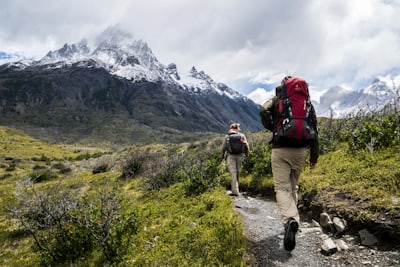
The most important thing in Darjeeling is not, as everyone will tell you, the view of Kanchenjunga from Tiger Hill at dawn. The most important thing in Darjeeling is the forest that covers the hills below the town — ancient, dense, mist-threaded, full of trees that have been quietly practicing at being trees for long enough that the practice has become mastery. Nobody mentions this. I am mentioning it.
Most people go to Darjeeling for the tea and the toy train and the view of Kanchenjunga on clear mornings. These are good reasons and I had them too. But what I kept returning to, long after the visit — what I keep seeing when I close my eyes in the right kind of quiet — is not any of those things. It is the forest. The forest that no one talks about because it is not on any list of things to do in Darjeeling, because it is simply there, as it has always been, enormous and unhurried and not particularly interested in being discovered.

The lower Darjeeling forest. Ferns that have been here longer than the tea estates. Possibly longer than everything.
The Trees That Remember Everything
The temperate forests of the lower Darjeeling hills are old in the way that makes you lower your voice without deciding to. The trees — oaks, chestnuts, rhododendrons that in spring become something violent and beautiful — grow here at a density that blocks the sky in sections. Between them, ferns that have been growing since before anyone thought to name this place Darjeeling. Moss on every surface. The smell of decomposing leaf matter that is the smell of time.
I walked into this forest on my first morning and stayed for three hours. Not hiking to a destination — just walking, slowly, watching what the light did as it came through the canopy in shafts, watching what the mist did as it moved between the trunks, listening to the particular silence of a forest that contains birds but that has sounds underneath the birdsong, structural sounds, the sounds of things growing.

The tall trees above Darjeeling. They grow upward because that is where the light is. We could learn from this.
"Old forests are the only places I know where the silence is not empty. It is full. It has mass. You can feel it against you when you stand in it long enough."
Darjeeling forests, West BengalThe Road That Goes Into It
There is a road above Darjeeling town that enters the forest and does not come out for several kilometres. It is not a scenic road — it is not marked anywhere, does not go to a viewpoint or a monastery or a tea estate. It simply goes into the forest. I rode it on the second morning and then sat on a milestone at the side of it for a long time, doing nothing in particular.
The road is one of those places where the act of being there is entirely the point. Not arriving. Not passing through. Simply occupying a space inside something old and large, and letting the old and large thing be what it is around you.

The forest road above Darjeeling. It goes in and does not seem to come out. This is the correct type of road.
Sitting With the Mountain
Kanchenjunga appeared on the third morning, as Kanchenjunga always appears — without warning, enormous, doing nothing to explain itself. The clouds had cleared overnight and there it was, the third-highest peak in the world, completely matter-of-fact about its own dimensions in the way that very large things often are.
I sat at the road's edge to look at it. A local man passed on a bicycle, glanced at the mountain, nodded at it slightly as one nods at a familiar neighbour, and continued pedalling. The mountain had been there his whole life. It did not require acknowledgement. It was simply part of the grammar of this place, the way old forests are part of the grammar, the way the mist is part of the grammar — a constituent element without which the sentence doesn't make sense.

Sitting on the forest road above Darjeeling. The mountain was out this morning. We nodded at each other.
I think about this often — the man on the bicycle nodding at Kanchenjunga. There is a relationship to landscape that comes from long familiarity, from being born into a place and remaining in it, that is entirely different from the relationship that travel produces. One is knowledge. The other is encounter. Both are valid. But I am increasingly convinced that encounter — the shock of the new, the disorientation of the unfamiliar — is only valuable insofar as it leads you back toward something. Toward attention. Toward noticing. Toward the capacity to one day nod at a mountain, familiarly, like a neighbour, without losing the knowledge of how extraordinary the fact of that mountain is.
Darjeeling — The Practical Things
- Getting thereNJP/Bagdogra → Darjeeling by taxi (3 hrs) or toy train (7 hrs)
- Best timeMarch–May (rhododendrons bloom) - Oct–Nov (clear Kanchenjunga views)
- The forestWalk from Darjeeling town toward Ghum - No entry fee - No crowds
- Toy trainUNESCO World Heritage - Darjeeling to Ghum - Book at station early
- Tiger HillSunrise Kanchenjunga view - 10km from town - Book shared jeep
- Tea estatesMakaibari, Happy Valley offer walks - Call ahead
- StayTown guesthouses ₹800–3,000 - Homestays on the hillsides
- PackWarm layers (cold year-round) - Rain jacket - Comfortable walking shoes